Ko wai mātou me ā matou mahi | Who we are and what we do
Toi Moana Bay of Plenty Regional Council’s work guides and supports the sustainable development of the Bay of Plenty.
As a regional council, we are responsible for land, air and water, as well as planning and delivery of public transport. The city and district councils in the region are responsible for public infrastructure (such as roading, drinking water and sewerage reticulation schemes, libraries and community centres), as well as animal control and parking. Our focus is on ensuring the sustainable development of our region in a way that keeps its natural resources and unique cultural features safe for future generations.
This means our core mahi (work) is looking after the environment. We manage the effects of people’s use of freshwater, land, air and coastal water, and help reduce the risk of natural hazards on local communities. We also have a broader responsibility, alongside others, for the economic, social and cultural wellbeing of the regional community.
Ā mātou mahi i tō tātou rohe | Our mahi in your region
The work we do across the Bay of Plenty reaches from Waihī Beach to Waihau Bay and includes Western Bay of Plenty District, Tauranga City, Kawerau District, Rotorua Lakes District, Whakatāne District, Ōpōtiki District and part of Taupō District.
From providing public transport to working with communities to tackle the challenges of climate change, the services we provide and the work we do covers a broad spectrum. You can find more details on our website, however here’s a quick snapshot of what we do:
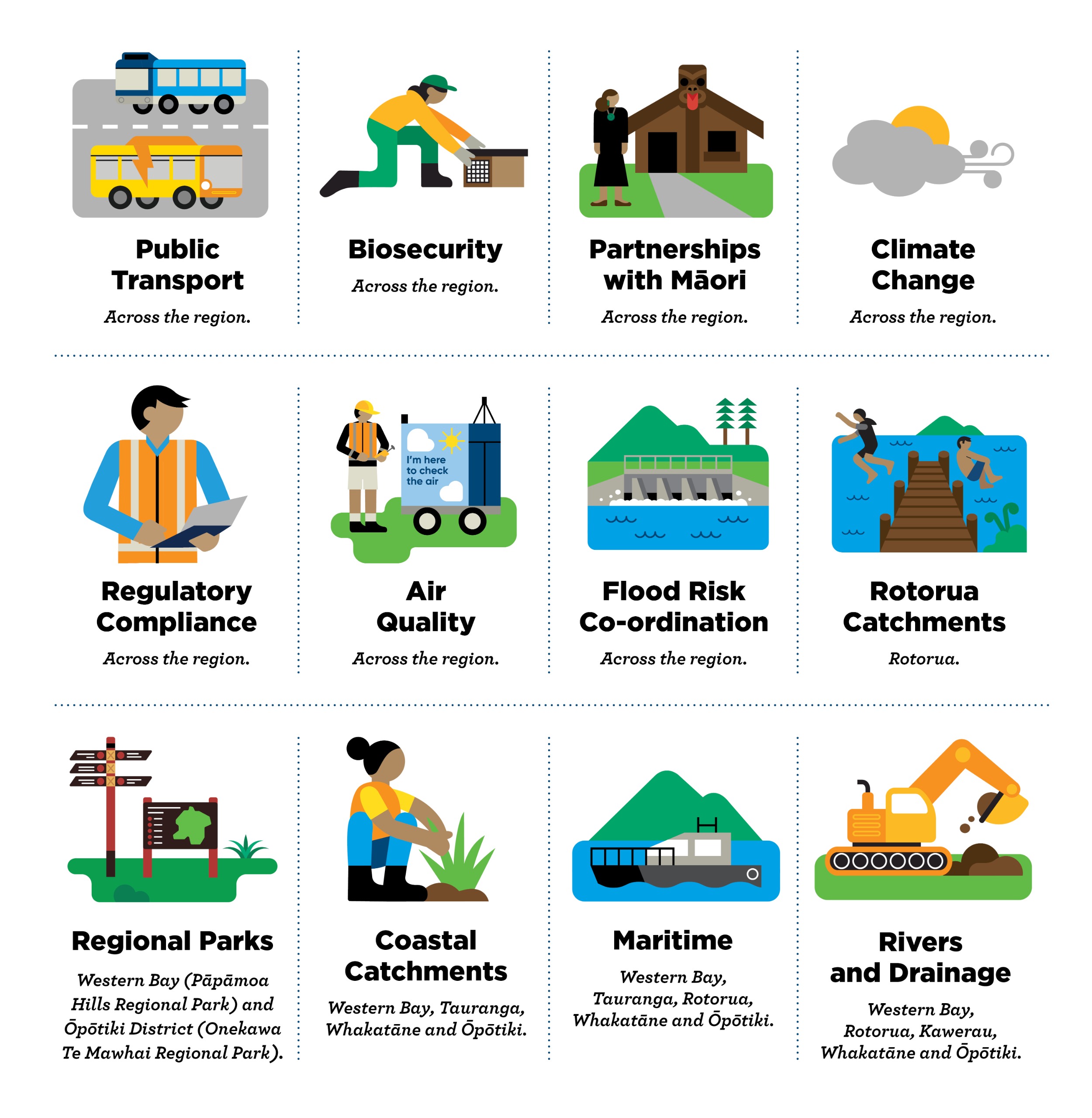
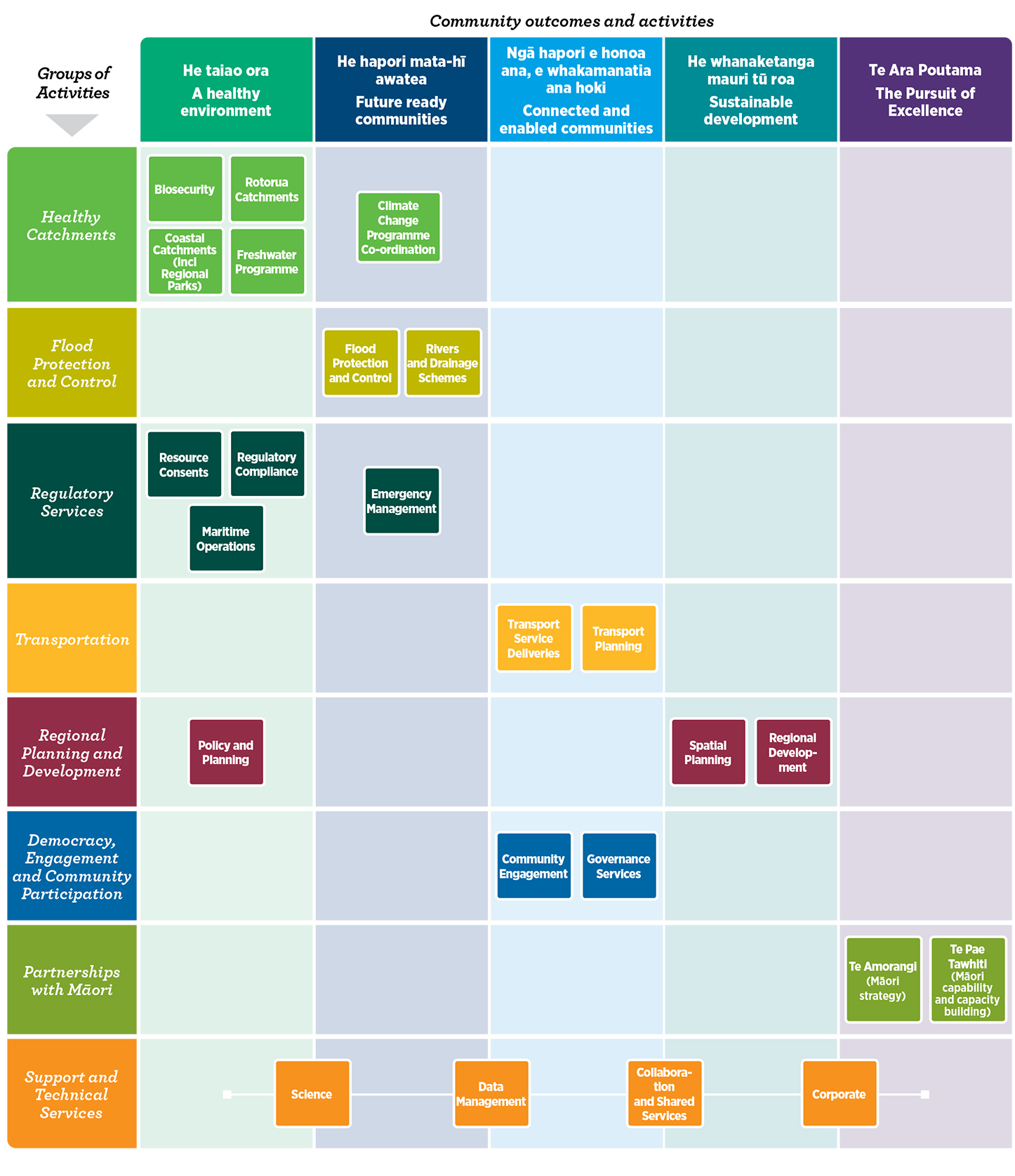
The work we do is carried out across 24 activities, split into eight groups. This supports reporting to the community on progress and performance, in relation to the community outcomes.
Note: We have allocated activities to the outcome they primarily contribute to, but the majority of our activities contribute to multiple outcomes.
- Restore and protect the region’s biodiversity (native plants and animals) and freshwater, ensuring the natural world can thrive to support lives and livelihoods for generations to come.
- Work with local communities to tackle pest plants and animals.
- Work alongside landowners and industry to make land use more sustainable.
- Restore and create salt marshes and coastal wetlands that support wildlife, and help protect against the impacts of a changing climate (such as increased storm surges and rising seas).
- Improve dune systems and the edges of rivers and streams, creating healthy habitats, reducing erosion and improving water quality.
- Support a huge network of volunteers who share our passion for protecting and restoring the environment.
- Own and manage regional parks, giving everyone spaces to enjoy nature.
- Help the region prepare for climate change by sharing information, assessing risks and supporting community-led adaptation planning.
- Forecast floods and monitor floodplains, using river surveys and engineering data to develop smart strategies that help manage the risk of flooding to people and property.
- Maintain flood management systems and run our Flood Room, so when severe weather hits, we’re ready to respond quickly and effectively.
- Keep critical flood infrastructure in good condition to help reduce the risk of extreme weather impacting local communities.
What’s new for 2026/27
- Manage activities that could impact the natural environment, making sure development and industry operate responsibly.
- Provide education, monitoring, and enforcement to prevent pollution and protect our waterways and land. Includes operating a 24/7 Pollution Hotline so anyone can report environmental concerns and incidents.
- Process resource consent applications, and ensure compliance with the Resource Management Act (RMA) through monitoring and enforcement.
- Oversee maritime activities to keep rivers, lakes, harbours and coastal waters safe for everyone.
- Support Civil Defence Emergency Management to strengthen the disaster resilience of our region.
- Lead transport planning and policy development across the region and shaping a transport system that works for everyone.
- Provide transport services that make it easier for people to get around, support economic growth, and contribute to a cleaner, greener region.
- We operate the Baybus network – Bayhopper services in the Western and Eastern Bay, school buses in Tauranga, Cityride in Rotorua, and regional routes that keep our communities connected.
- Strengthen Māori capacity and capability so iwi and hapū can actively contribute to decision making.
- Provide strategic advice and leadership on Māori outcomes, partnerships, and the integration of Te Ao Māori, meeting our statutory responsibilities and building meaningful relationships.
- Implement Treaty settlement arrangements and support post-settlement co-governance forums, ensuring shared decision making and strong partnerships.
- Develop strategies, policies and plans to manage our natural and physical resources wisely.
- Collaborate with local councils to create spatial plans and growth strategies across the region that promote sustainable development and climate-resilient communities.
- Build regional profiles and make data accessible, so decisions are informed and transparent.
- Ensure regional infrastructure is integrated, efficient, and delivers real benefits, backed by thorough cost–benefit assessments.
What’s new for 2026/27
- Contributing $1 million towards the Tarawera Sewerage Scheme, alongside Central Government and Rotorua Lakes Council, to ensure the project’s success.
- Responding to resource management reform changes.
- Ōpōtiki Harbour dredging – $1 million per year for the next three years to fund dredging that is essential to maintain the harbour channel.
- Ensure engagement processes are fair and accessible, so everyone has the chance to have their say and help shape Regional Council decisions.
- Support open, transparent, and fair governance by strengthening the democratic processes that give our work a clear mandate from ratepayers.
- Provide grants for community-led projects that enhance the environment and wellbeing, and help volunteers build capability and capacity to deliver great outcomes for the region.
- Work collaboratively with partners and ensure equitable engagement for greater community impact, including strong partnerships with Māori.